Between October and April, a typical roof in Newberg sheds thousands of gallons of rainwater. Most of it rushes through downspouts into storm drains and, eventually, local streams. A rain garden is a simple way to slow that water down, let it soak into the ground and create a beautiful planted feature at the same time.
What is a rain garden?
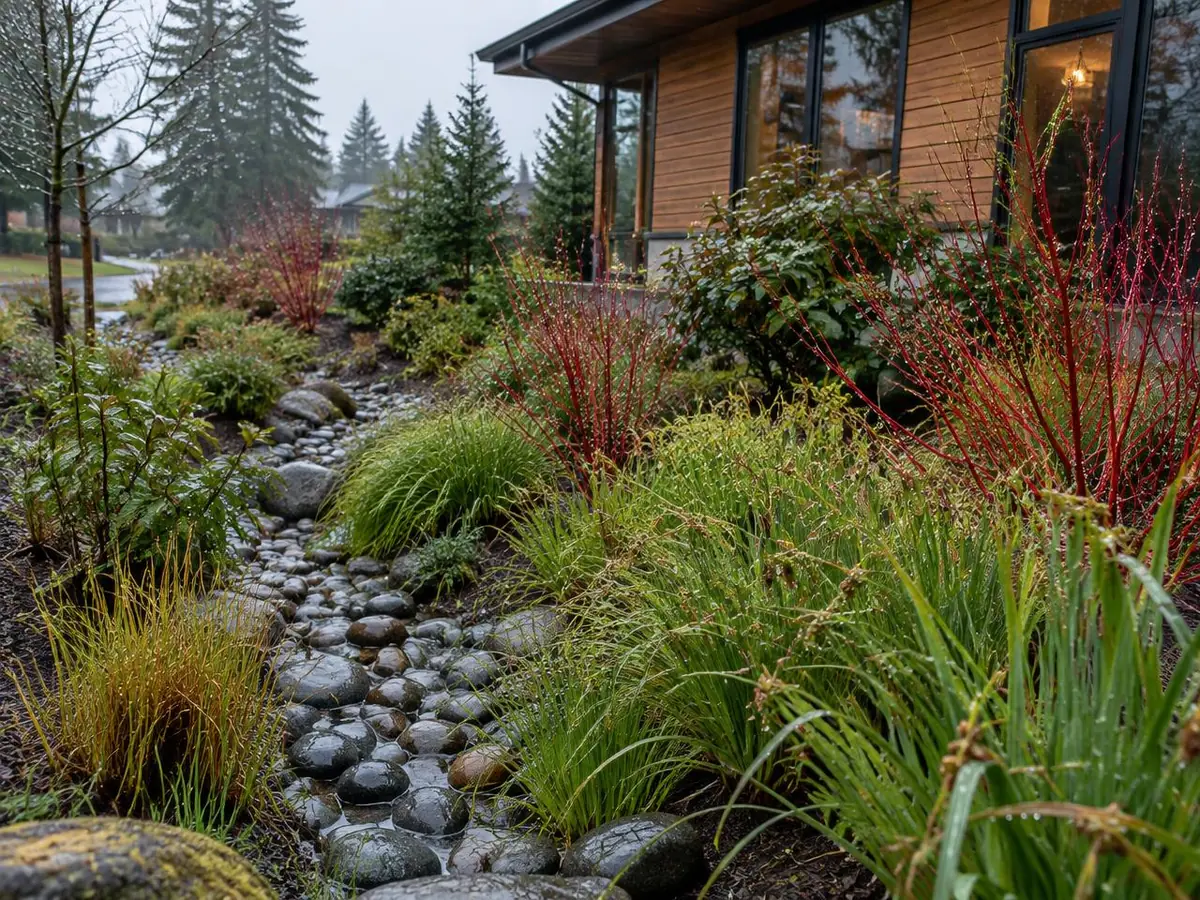
A rain garden is a shallow, planted depression that collects runoff from a roof, driveway or patio. During storms it fills with a few inches of water, which then soaks into the soil — ideally within 24 to 48 hours. In summer it's simply a planted bed that happens to be slightly lower than its surroundings.
Choosing the right spot
- Keep it at least 10 feet from house foundations and away from basements.
- Never place it over a septic drainfield or near a well.
- Avoid spots where water already sits for days — that usually means the soil drains too slowly.
- Check for buried utilities before digging. In Oregon, call 811 or request a locate online at least two business days in advance.
- Choose a place where overflow during very heavy storms can run safely away from buildings and neighbors.
Test your drainage first
Dig a hole about 2 feet deep, fill it with water and let it drain. Fill it again and measure how fast the water level drops. Ideally it should fall at least half an inch per hour. On heavy valley clay it may be slower, which means a larger, shallower rain garden or improved soil in the basin.
Sizing it
Size depends on the area draining to it and your soil. As a rough guide, rain gardens range from about 10 percent of the roof area feeding them on fast-draining soils to 20–30 percent on slow-draining clay. Oregon State University Extension's Oregon Rain Garden Guide has detailed sizing tables and is well worth reading.
Most residential rain gardens are 6 to 12 inches deep, with gently sloping sides and a level bottom.
What to plant
Think in three zones:
- Bottom (wettest): slough sedge, spreading rush, small-fruited bulrush and camas — plants that cope with standing water in winter and dry soil in summer.
- Sides: red twig dogwood, Douglas spirea, Pacific ninebark and deer fern.
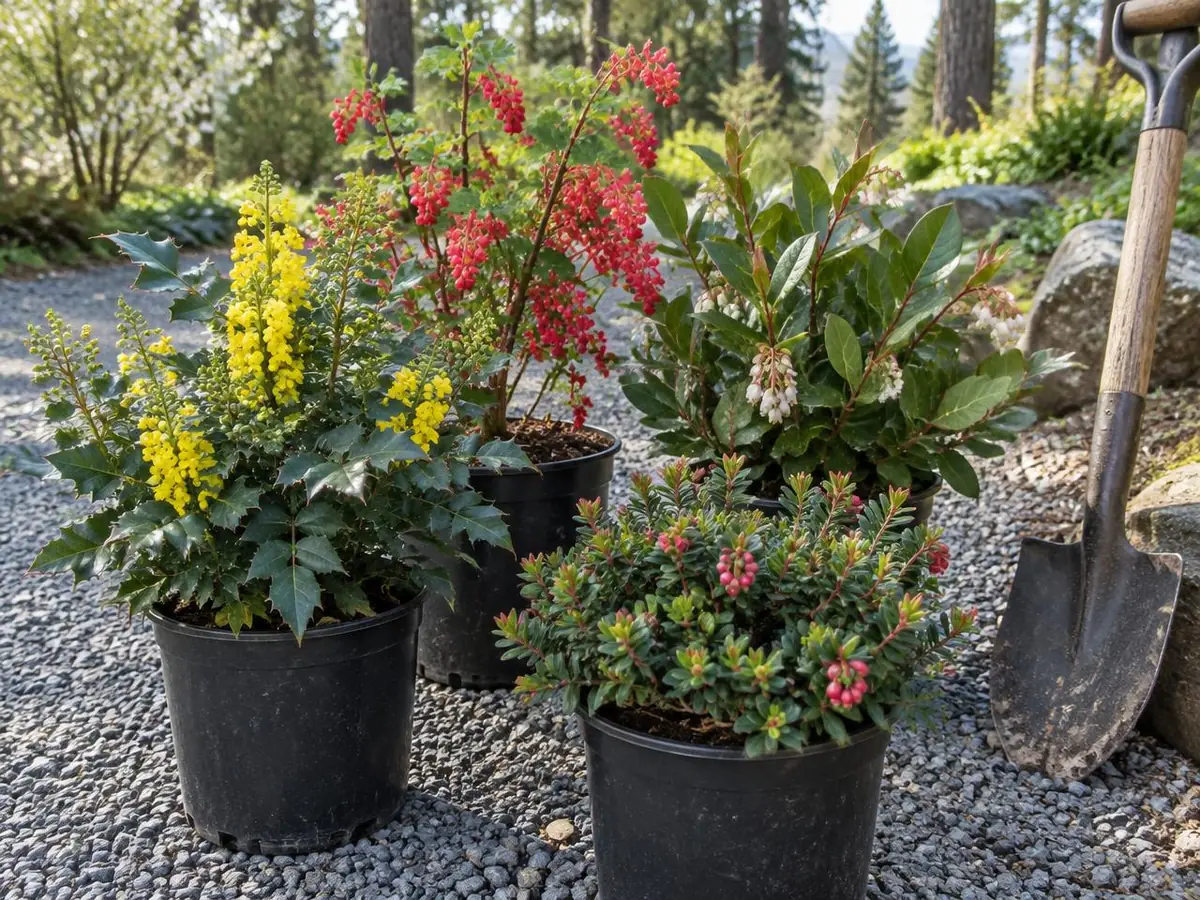
- Rim (driest): Oregon grape, sword fern, Oregon iris, kinnikinnick and flowering currant.
Choose plants that look good in August as well as February — a rain garden spends most of the summer completely dry.
Inlet, overflow and finishing
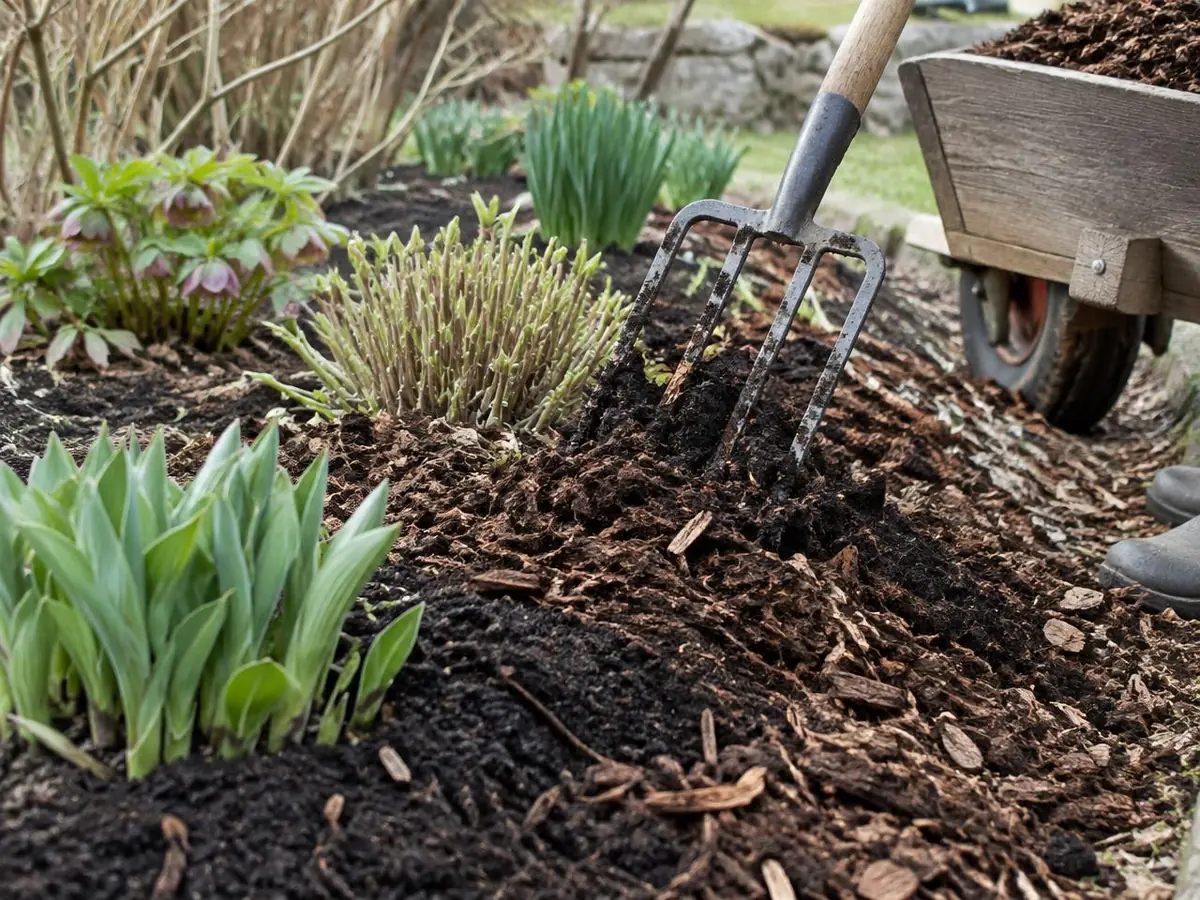
Direct the downspout into the garden through a pipe or a rock-lined swale, and line the inlet with river rock so the water doesn't scour the soil. Build an overflow point on the lowest edge of the rim, also lined with rock, so very heavy storms leave the garden in a controlled way. Finish with 2–3 inches of coarse mulch or wood chips.
Care
Water new plants through the first two summers, weed regularly in the first year and clear leaves or sediment from the inlet each autumn. After that, a rain garden needs no more care than any other planted bed.
This article offers general guidance for gardens in western Oregon. Every site is different; for advice on your own garden, get in touch.